



Safety First
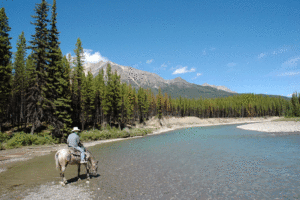
Backpackers and horseback riders seeking a true backcountry experience can explore many hundreds of kilometres of trails where wildlife abounds. Visitors to the Rockies should be experienced and well-equipped for extended backcountry adventures.
One of the most used trails by horse enthusiasts and hikers is from the ‘Rock Lake Staging area to Eagle’s Nest Pass’. Access is on an old CAT trail from the 1950s used in oil and gas exploration. There are many campgrounds along this stretch of the trail. If you are a well-seasoned multi-day traveller, the trail continues to Grande Cache.
There is another CAT Trail, called the ‘Sheep Creek Trail’ that starts at the Sulphur Gates Staging Area, it has two crossings of the Muddy Water River, and goes to an abandoned airstrip at Sheep Creek. A spur-trail carries on from the airstrip to connect to the Great Divide Trail. There are many spur-trails along this route that can take travellers to scenic alpine expanses.
Both the Sheep Creek Trail and the trail to Eagle’s Nest Pass route have dangerous river crossings, especially in high water. Both the first and second crossing of the Muddy Water River are two of the most dangerous river crossings in Willmore Wilderness and have been known to drown both hikers and horses, so caution is advised.
The Wild Hay River and the Berland River can also be dangerous in high water, especially for hikers. Extra care needs to be taken when crossing fast flowing rivers and creeks.
There is another dangerous area on the Smoky River called Clarks Crossing. It was named after Stan Clark who had entered the employment of the Canadian Forestry Service, becoming the first Superintendent in 1912. After he retired, Stan Clark became an outfitter and would take his hunters from Entrance to Rock Lake, over Eagle’s Nest, up Rock Creek to the Sulphur River, to Big Grave, up Kvass Creek, and down Wolverine Creek, across Smoky River and up to Sheep Creek. The Smoky was a difficult ford for foot and horse travellers. So, Stan Clark had packed a boat on a horse to the Big Smoky, and built a boathouse which is located upstream from the confluence of Wolverine Creek on the south side of the Smoky. The site became known as Clark’s Crossing. Stan Clark’s trapline cabin is still standing. Located on the north side of the Big Smoky, upstream from the mouth of the Muddy Water River and across from his boathouse. Clark’s Crossing is a boat crossing that has a very dangerous whirlpool close by, which has drowned men of yester-year who travelled across the river on horseback. A boat or raft should be used to cross the Smoky.
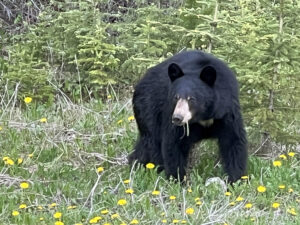
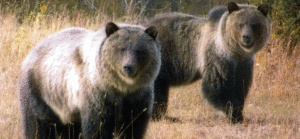
Travellers should pack readily accessible bear spray, fire starter, matches, a First Aid kit, a knife or multitool, a flashlight, rain gear, extra clothing, appropriate boots, a Garmin InReach or GPS, map, and compass. Weather is unpredictable and can change very rapidly. A hot summer’s day can quickly turn into stormy cold weather. It can snow and freeze in the Rockies during the summer months, so be prepared. Please remember that Willmore Wilderness Park is vast rugged wilderness with no amenities or help if you get into trouble. The weather, wildlife and remoteness of the park is unforgiving. We strongly recommend that overnight travellers who are unfamiliar with the area, seek the services of a guide and outfitter who knows this region of the Rockies.
The Willmore Wilderness Foundation, a Registered Non-Profit Canadian Charity, has been actively clearing trails and rehabilitating historic campsites for more than 20 years. The Foundation owns and operates People & Peaks Productions Ltd., which produces television documentaries and social media for educational purposes.
Grande Industrial Grande Cache
10022 98th Street, Grande Cache, AB, Canada, Alberta

Safety First
Backpackers and horseback riders seeking a true backcountry experience can explore many hundreds of kilometres of trails where wildlife abounds. Visitors to the Rockies should be experienced and well-equipped for extended backcountry adventures.
One of the most used trails by horse enthusiasts and hikers is from the ‘Rock Lake Staging area to Eagle’s Nest Pass’. Access is on an old CAT trail from the 1950s used in oil and gas exploration. There are many campgrounds along this stretch of the trail. If you are a well-seasoned multi-day traveller, the trail continues to Grande Cache.
There is another CAT Trail, called the ‘Sheep Creek Trail’ that starts at the Sulphur Gates Staging Area, it has two crossings of the Muddy Water River, and goes to an abandoned airstrip at Sheep Creek. A spur-trail carries on from the airstrip to connect to the Great Divide Trail. There are many spur-trails along this route that can take travellers to scenic alpine expanses.
Both the Sheep Creek Trail and the trail to Eagle’s Nest Pass route have dangerous river crossings, especially in high water. Both the first and second crossing of the Muddy Water River are two of the most dangerous river crossings in Willmore Wilderness and have been known to drown both hikers and horses, so caution is advised.
The Wild Hay River and the Berland River can also be dangerous in high water, especially for hikers. Extra care needs to be taken when crossing fast flowing rivers and creeks.
There is another dangerous area on the Smoky River called Clarks Crossing. It was named after Stan Clark who had entered the employment of the Canadian Forestry Service, becoming the first Superintendent in 1912. After he retired, Stan Clark became an outfitter and would take his hunters from Entrance to Rock Lake, over Eagle’s Nest, up Rock Creek to the Sulphur River, to Big Grave, up Kvass Creek, and down Wolverine Creek, across Smoky River and up to Sheep Creek. The Smoky was a difficult ford for foot and horse travellers. So, Stan Clark had packed a boat on a horse to the Big Smoky, and built a boathouse which is located upstream from the confluence of Wolverine Creek on the south side of the Smoky. The site became known as Clark’s Crossing. Stan Clark’s trapline cabin is still standing. Located on the north side of the Big Smoky, upstream from the mouth of the Muddy Water River and across from his boathouse. Clark’s Crossing is a boat crossing that has a very dangerous whirlpool close by, which has drowned men of yester-year who travelled across the river on horseback. A boat or raft should be used to cross the Smoky.
Travellers should pack readily accessible bear spray, fire starter, matches, a First Aid kit, a knife or multitool, a flashlight, rain gear, extra clothing, appropriate boots, a Garmin InReach or GPS, map, and compass. Weather is unpredictable and can change very rapidly. A hot summer’s day can quickly turn into stormy cold weather. It can snow and freeze in the Rockies during the summer months, so be prepared. Please remember that Willmore Wilderness Park is vast rugged wilderness with no amenities or help if you get into trouble. The weather, wildlife and remoteness of the park is unforgiving. We strongly recommend that overnight travellers who are unfamiliar with the area, seek the services of a guide and outfitter who knows this region of the Rockies.
The Willmore Wilderness Foundation, a Registered Non-Profit Canadian Charity, has been actively clearing trails and rehabilitating historic campsites for more than 20 years. The Foundation owns and operates People & Peaks Productions Ltd., which produces television documentaries and social media for educational purposes.
Grande Industrial Grande Cache
10022 98th Street, Grande Cache, AB, Canada, Alberta
Be Prepared
Backcountry Travel in Willmore Wilderness Park
Willmore Wilderness Park offers a true backcountry experience for experienced backpackers and horseback riders. Visitors can explore hundreds of kilometres of rugged trails through remote mountain country where wildlife is abundant.
This is serious wilderness travel. Visitors should be experienced, properly equipped, and prepared for extended backcountry trips.
Popular Routes
Rock Lake Staging Area to Eagle’s Nest Pass
One of the most popular routes for horse enthusiasts and hikers, this trail follows an old CAT trail from the 1950s used in oil and gas exploration. There are many campgrounds along the route, and for seasoned multi-day travellers, the trail can continue all the way to Grande Cache.
Sheep Creek Trail (from Sulphur Gates Staging Area)
This route crosses the Muddy Water River twice and leads to an abandoned airstrip at Sheep Creek. A spur trail continues from the airstrip to connect with the Great Divide Trail, and other spur trails access scenic alpine areas.
Important Safety Warning: River Crossings
Both the Sheep Creek Trail and the Eagle’s Nest Pass route include dangerous river crossings—especially during high water.
The first and second crossings of the Muddy Water River are among the most dangerous in Willmore Wilderness.
These crossings have drowned both hikers and horses.
– The Wild Hay River and Berland River can also be dangerous in high water, especially for hikers.
– Use extreme caution when crossing fast-flowing rivers and creeks.
– Clark’s Crossing (Smoky River) — High Risk Area
– Another dangerous area is Clark’s Crossing on the Smoky River, named after Stan Clark, an early Canadian Forestry Service superintendent (1912) who later became an outfitter.
– Clark’s Crossing is historically significant, but it is also hazardous. A dangerous whirlpool near the crossing has contributed to past drownings of horseback travellers.
– A boat or raft should be used to cross the Smoky River at Clark’s Crossing.
Be Prepared
Conditions in the Rockies can change quickly. A warm summer day can turn cold, wet, or snowy in a matter of hours. Willmore Wilderness Park is vast, remote, and unforgiving, with no services or immediate help if something goes wrong.
Travellers should carry essentials such as:
– Bear spray (readily accessible)
– Fire starter and matches
– First Aid kit
– Knife or multitool
– Flashlight
– Rain gear and extra clothing
– Appropriate boots
– GPS / Garmin InReach
– Map and compass
Travel Smart
If you are unfamiliar with the area, we strongly recommend hiring a local guide or outfitter with experience in this region of the Rockies.
The Willmore Wilderness Foundation, a registered Canadian charity, has been actively clearing trails and rehabilitating historic campsites for more than 20 years to help protect and maintain safe access to this remarkable wilderness.
Grande Industrial Grande Cache
10022 98th Street, Grande Cache, AB, Canada, Alberta